California Fire Led To Spike in Fecal Bacteria in Coastal Waters
कैलिफोर्निया में 2018 वूल्सी फायर ने लॉस एंजिल्स और वेंचुरा काउंटियों में लगभग 100,000 एकड़ को जला दिया। यह छवि 9 नवंबर, 2018 को ली गई थी। क्रेडिट: वन सेवा, यूएसडीए (पीटर बुशमैन के सौजन्य से)
दक्षिणी कैलिफोर्निया के एक बड़े जंगल की आग के बाद के महीनों में वैज्ञानिकों ने तटीय जल की गुणवत्ता का विश्लेषण किया। उनके परिणाम आंखें खोलने वाले थे।
दक्षिणी कैलिफोर्निया के लॉस एंजिल्स और वेंचुरा काउंटियों में नवंबर 2018 वूल्सी फायर ने लगभग 100,000 एकड़ से अधिक जलने के निशान को पीछे छोड़ दिया: इसने आस-पास के तटीय जल को असामान्य रूप से उच्च स्तर के फेकल बैक्टीरिया और तलछट के साथ छोड़ दिया जो महीनों तक बना रहा।
जर्नल में प्रकाशित एक नए अध्ययन के लिए वैज्ञानिक रिपोर्टवैज्ञानिकों ने आग के बाद तटीय जल की गुणवत्ता के लिए दो मानक मापदंडों का आकलन करने के लिए उपग्रह इमेजरी, वर्षा डेटा और पानी की गुणवत्ता रिपोर्ट को संयुक्त किया: फेकल संकेतक बैक्टीरिया की उपस्थिति और पानी की मैलापन, या बादल।
फेकल इंडिकेटर बैक्टीरिया मनुष्यों और अन्य गर्म रक्त वाले जानवरों के जठरांत्र संबंधी मार्ग से उत्पन्न होते हैं। हालांकि वे हानिकारक नहीं हैं, वे मल में पाए जाने वाले अन्य बैक्टीरिया और रोगजनकों की उपस्थिति का संकेत देते हैं जो हो सकते हैं। टर्बिडिटी के अन्य निहितार्थ हैं: बादल, धुंधले पानी के परिणामस्वरूप समुद्री जीवन तक कम धूप पहुंचती है - जैसे कि केल्प और फाइटोप्लांकटन - जो जीवित रहने के लिए इस पर निर्भर करते हैं।
जब बारिश होती है, तो अपवाह आमतौर पर कुछ बैक्टीरिया और तलछट को भूमि से तटीय जल में ले जाता है। लेकिन आग के बाद दोनों में भारी स्पाइक कुछ भी नहीं बल्कि विशिष्ट था।
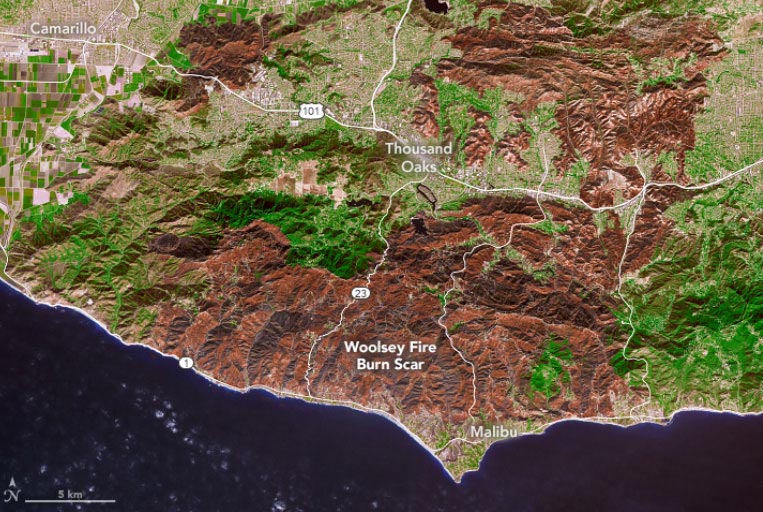
वूल्सी फायर बर्न स्कार, लाल रंग में दिखाया गया था, जो अंतरिक्ष से दिखाई देने के लिए काफी बड़ा था, जैसा कि नासा के टेरा उपग्रह से इस दृश्य में देखा गया है। अधिक प्राकृतिक स्वरूप का अनुकरण करने के लिए छवि में रंगों को बढ़ाया गया है। साभार: नासा अर्थ ऑब्जर्वेटरी
“आग के बाद, हमने पानी की गुणवत्ता में भारी बदलाव देखा, विशेष रूप से जले हुए क्षेत्र में जल निकासी वाले समुद्र तटों पर,” अध्ययन के प्रमुख लेखक, मैरिसोल सीरा, एक यूसीएलए पीएच.डी. ने कहा। उम्मीदवार और एक प्रशिक्षु[{” attribute=””>NASA’s Jet Propulsion Laboratory in Southern California. “In those areas, both total coliform bacteria and enterococcus were far greater than pre-fire levels, as was turbidity plume size.”
More specifically, the researchers concluded that the post-fire monthly average of total coliforms – a large group of fecal indicator bacteria that can be found in soil, on plants, and in human waste – was 10 times higher than it was for any month in the previous 12 years’ worth of data. Enterococcus, which indicates the presence of bacteria that can cause gastrointestinal disease, was 53 times higher – and well above what is considered safe for recreational use of the water. (Local authorities issued water quality warnings at the time.)
The Woolsey Fire led to a spike in turbidity, or cloudiness from sediment, in coastal waters off Southern California. This annotated map shows turbidity before (top) and after the fire, with bright yellow indicating the largest increases. Credit: NASA Earth Observatory
To assess turbidity levels, the study team analyzed satellite imagery from before, during, and after the fire. They were able to estimate the size of sediment plumes that moved into coastal waters following rain events – when turbidity levels usually increase. They found that the surface areas of turbidity plumes during the first storm following the Woolsey Fire were about 10 times greater than those following similar rain events from pre-fire years.
Researchers noted that bacteria levels remained high through February 2019 and took six months to return to pre-fire levels; turbidity remained high for three months before returning to previous levels.
Why the Fire Is Responsible
During normal conditions, soil absorbs much of the water that falls when it rains, preventing a lot of bacteria and sediment from making its way to the coast. But after a fire, that’s not the case.
“When a fire burns through a forest, it increases the amount of vegetation litter on the ground and changes the chemistry of the soils in a way that makes them unable to absorb water,” said Christine Lee, a study coauthor at JPL
” data-gt-translate-attributes=”[{” attribute=””>JPL. “So rather than getting absorbed into the soil, rain runs off into local water bodies and coastal systems, carrying sediment and bacteria with it.”
The researchers also looked at the amount of post-fire fecal indicator bacteria in the water during different weather conditions. They found that more bacteria were present in wet weather than in dry weather; but, in both cases, average monthly bacteria levels showed dramatic and prolonged increases over pre-fire levels.
“Usually when there’s a spike of bacteria in the water, it only lasts a day or two,” said Luke Ginger, scientist and study coauthor from the nonprofit Heal the Bay in Santa Monica, California. “But after the fire, there were months of sustained high bacteria. So that was a big concern.”
What’s Next
Wildfire seasons are becoming longer and more intense; in fact, the seven largest California wildfires on record have occurred during the last four years.
“Climate change will likely exacerbate the effects we see here in terms of water quality as wildfire and rainfall patterns continue to change,” said Ginger. “A key part in protecting our ecosystems and communities is understanding these emerging threats and spreading awareness about them.”
While this study examined only the effects of the 2018 Woolsey Fire, an upcoming NASA project called KelpFire, funded by NASA’s Minority University Research and Education Program (MUREP), will explore additional coastal watersheds in California. This effort will dive deeper into how fire-related impacts like those discussed in this study affect the greater coastal ecosystem, such as kelp forests.
Reference: “Turbidity and fecal indicator bacteria in recreational marine waters increase following the 2018 Woolsey Fire” by Marisol Cira, Anisha Bafna, Christine M. Lee, Yuwei Kong, Benjamin Holt, Luke Ginger, Kerry Cawse-Nicholson, Lucy Rieves and Jennifer A. Jay, 14 February 2022, Scientific Reports.
DOI: 10.1038/s41598-022-05945-x
(function(d, s, id){
var js, fjs = d.getElementsByTagName(s)[0]; अगर (d.getElementById(id)) वापसी; js = d.createElement(s); js.id = आईडी; js.src = “//connect.facebook.net/en_US/sdk.js#xfbml=1&version=v2.6”; fjs.parentNode.insertBefore(js, fjs); }(दस्तावेज़, ‘स्क्रिप्ट’, ‘facebook-jssdk’));