The Geocenter of the Earth Is Changing (and Why That Matters) [Video]
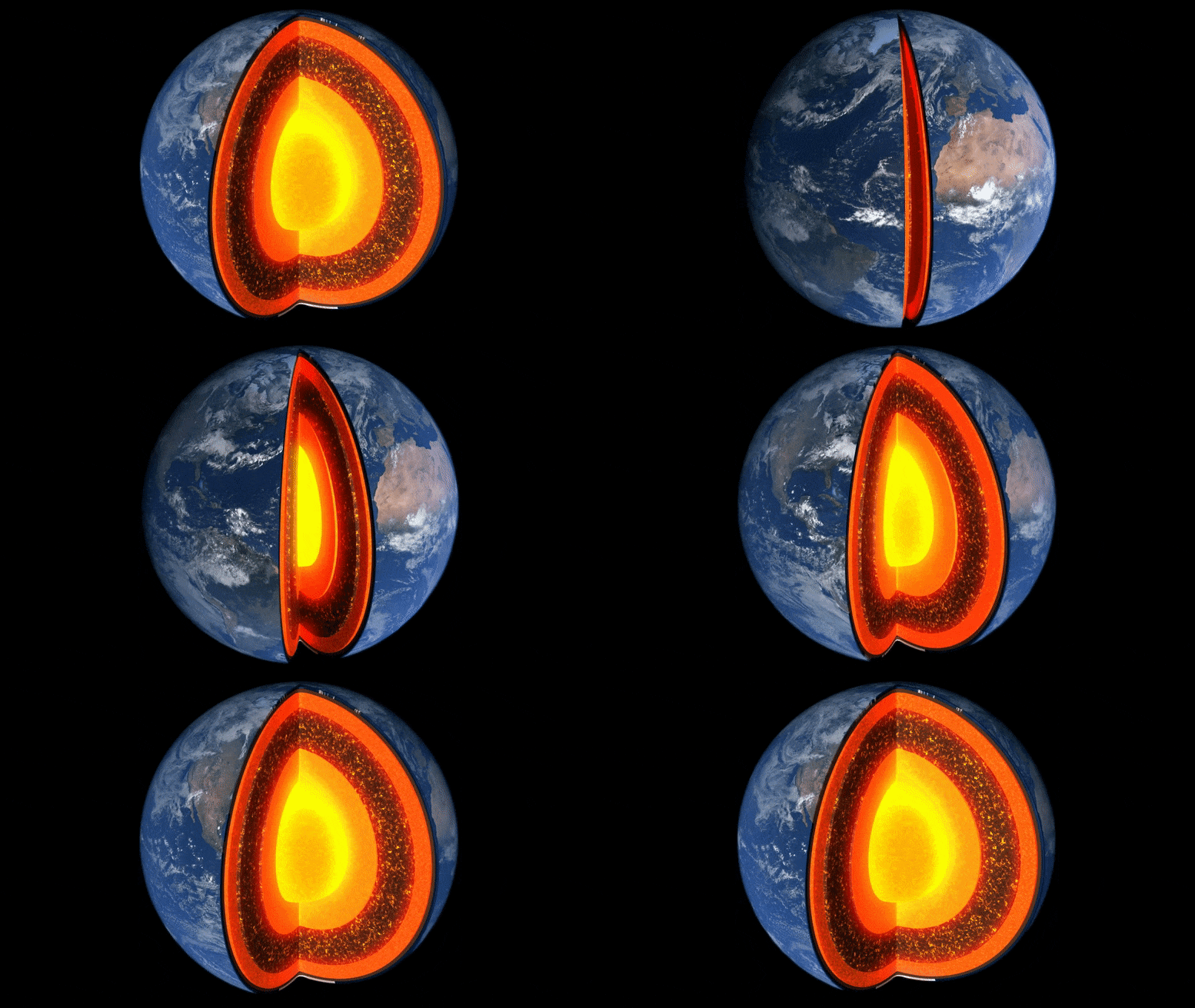
लगभग सभी हवाई, अंतरिक्ष-आधारित और भू-आधारित पृथ्वी अवलोकनों की नींव में TRF, या स्थलीय संदर्भ फ़्रेम है। टीआरएफ पृथ्वी के भू-केंद्र (पृथ्वी का केंद्र द्रव्यमान) की सटीक गणना पर निर्भर करता है। हालांकि, एक जटिलता यह है कि भू-केंद्र लगातार पृथ्वी की सतह के संबंध में बदल रहा है। टेलीस्कोप और लेजर से लैस ग्राउंड स्टेशनों के एक नेटवर्क का उपयोग करके, जो विशिष्ट उपग्रहों पर दालों को आग लगाते हैं, वैज्ञानिक यह गणना कर सकते हैं कि पृथ्वी का भू-केंद्र किसी भी समय कुछ मिलीमीटर से लेकर यह सुनिश्चित करने के लिए है कि हमारी पृथ्वी के अवलोकन सटीक हैं।
https://www.youtube.com/watch?v=5WqaKOor-qys
वीडियो प्रतिलेख:
[Upbeat Music]
अनाउन्सार: अभी तुम कहाँ हो?
या बेहतर अभी तक, आप कैसे जानते हैं कि आप कहां हैं?
सबसे अधिक संभावना है कि आप एक ऐसे ऐप का उपयोग कर रहे हैं जो जीपीएस का उपयोग कर रहा है ताकि यह पता लगाया जा सके कि आप वास्तव में पृथ्वी पर कहां हैं।
लेकिन आप जो नहीं जानते होंगे वह यह है कि आपके पसंदीदा नेविगेशन ऐप के पीछे सिस्टम का एक अदृश्य बुनियादी ढांचा है जो आपको एक सटीक स्थान प्रदान करने के लिए एक साथ काम कर रहा है, और इन प्रणालियों की नींव एक टीआरएफ या स्थलीय संदर्भ फ्रेम है।
डॉ. स्टीफन मर्कोविट्ज़: तो संदर्भ फ्रेम किसी भी प्रकार के मानचित्रण, स्थान, स्थिति, नेविगेशन एप्लिकेशन के लिए मौलिक है।
अनाउन्सार: वह डॉ. स्टीफन मर्कोविट्ज है,[{” attribute=””>NASA’s Space Geodesy Project Manager.
Simply put, geodesy is the science of measuring and understanding the shape of the Earth, its orientation in space and gravity, and how they change over time.
Dr. Stephen Merkowitz: Earth is constantly changing shape, and the land masses are constantly moving.
It’s at small levels, so it’s not something you would feel, you know, yourself.
So we’re constantly measuring what’s happening with the Earth as a whole and the Earth’s surface.
Narrator: To do this, NASA and international partners monitor measurement stations dotted across the globe that help us determine where, how much and in which direction our planet is changing.
Dr. Stephen Merkowitz: Since the Earth’s surface is always moving, any measurement isn’t just in a fixed coordinate system. It needs to take into account the fact that it’s related to the landmass and where that landmass is at any given time.
Narrator: And just like a coordinate system plotted on a piece of paper, the TRF has an origin or in this case, the center mass of the Earth – called the geocenter.
Because of this, many Earth observing satellites orbit around the center mass of the Earth, not the Earth’s geographic center.
So it’s critical for scientists to pinpoint where that is to make sure our Earth observations are accurate.
Dr. Stephen Merkowitz: One complication is that the center mass of the Earth is constantly changing over time with respect to the Earth’s surface.
Narrator: Earthquakes, volcanoes, or even atmospheric pressure changes all impact where exactly the center mass of the Earth is.
But by using a network of ground stations equipped with telescopes and lasers that fire pulses at specific satellites, scientists can calculate where the geocenter of the Earth is at any given time to a few millimeters.
Dr. Stephen Merkowitz: This is a very important product that we generate for orbiting satellites, particularly for missions that are either doing mapping the gravitational field of the Earth or mapping the height of the Earth’s surface, whether it be land, vegetation, or sea level.
We make that available to the public, we use the data there to generate a higher level of products, geodetic products, that can be used by NASA missions for many scientific applications.
Since this is a global measurement, NASA can’t do it alone.
We rely on the global community to provide all the data that’s needed to provide global coverage.
Narrator: Having an agreed upon international system is what makes measuring our planet possible, whether it be from land, sea, air, or even space.
(function(d, s, id){
var js, fjs = d.getElementsByTagName(s)[0]; अगर (d.getElementById(id)) वापसी; js = d.createElement(s); js.id = आईडी; js.src = “//connect.facebook.net/en_US/sdk.js#xfbml=1&version=v2.6”; fjs.parentNode.insertBefore(js, fjs); }(दस्तावेज़, ‘स्क्रिप्ट’, ‘facebook-jssdk’));